KPI Green Energy: The Duality of Growth
If you have ever had a chance to glance at your electricity bill, you would know the tariff rate or the cost per unit of the electricity that you pay to your DISCOM. A DISCOM transmits electricity from the power-generating hubs to the end user. In India, what generally happens—and this may also happen in other parts of the world—is that the power producer is generally a different entity, and the power distribution or the DISCOM is a different entity. The DISCOM buys the electricity from the power producer and distributes it through a set of wires and transformers to the end users.
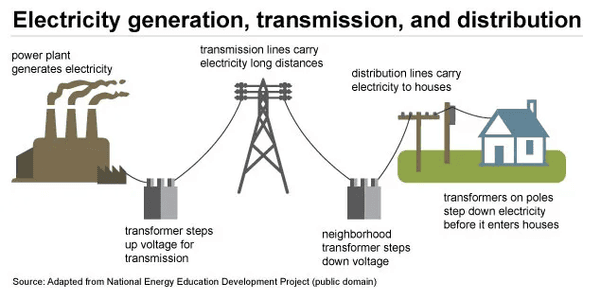
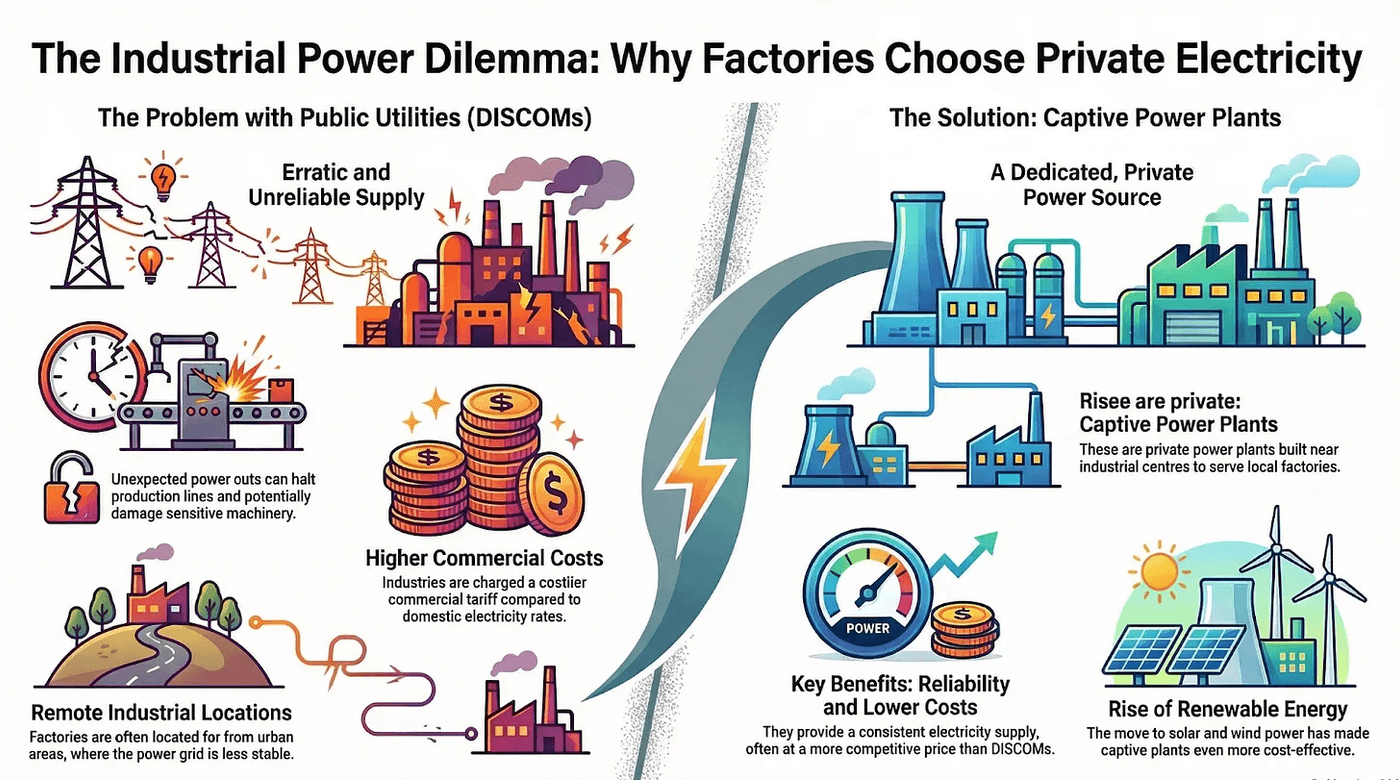
Just like you use electricity from the DISCOMs for your house, industries also turn to DISCOMs for their electricity needs. However, since industries are usually located away from the urban areas, the electricity supply can be erratic. Generally, industries would shy away from using erratic sources of supply because their machines may not run properly, or the whole production could come to a halt even with a 1-minute power interruption. Therefore, the industry would try to build its own small power plants or reach out to private players for electricity supply, or they may even use larger generators.
Another factor to consider is that the electricity supply to the industries comes under commercial, which is usually costlier than the domestic supply that we receive in our houses. So even when the supply is good, some of the industries or factories turn to private producers for electricity. These private producers use something called a captive power plant, which is sort of a private power plant and distribution center. A captive power plant is generally located at a place where a large number of factories are centered. This is done in order to have a large number of customers so as to make it viable. Captive power plants offer two benefits:
- The electricity supply is reliable
- The costs are lower
With the advent of solar energy and wind energy, the cost of captive power plants has gone down significantly. Captive power plants would generally develop grid-connected electricity-producing solar, wind, or even fossil fuel from generators. I mean, generally, it was electricity from generators using fossil fuels, but now most of the captive power plants use solar and wind. So, such a power plant would develop grid-connected solar projects for its customers, which are the industries. They would have more than one solar installation; they would have solar installations close by, and they would connect them to a grid, just like DISCOMS do.
Now, industries could hire these private players to install a complete solar plant for their own use. The second option is that they buy electricity based on a per-unit tariff from these producers. Generally, using solar and wind, these costs are lower than what they would have to pay to fossil fuel producers and discoms. When industries have everything installed for their personal use, and they own the power plant, these are known as captive power plants (CPP). However, when industries reach out to private players and purchase electricity on a per-unit basis, the seller is an independent power producer (IPP).
KPI Green Energy is one of the companies that provides electricity to industries using the CPP model as well as the IPP model. The latest revenue share based on H1FY2026 shows that 91% of the revenue share for KPI Green Energy comes from the CPP model, and 9% comes from the IPP model. However, IPP share is likely to increase.
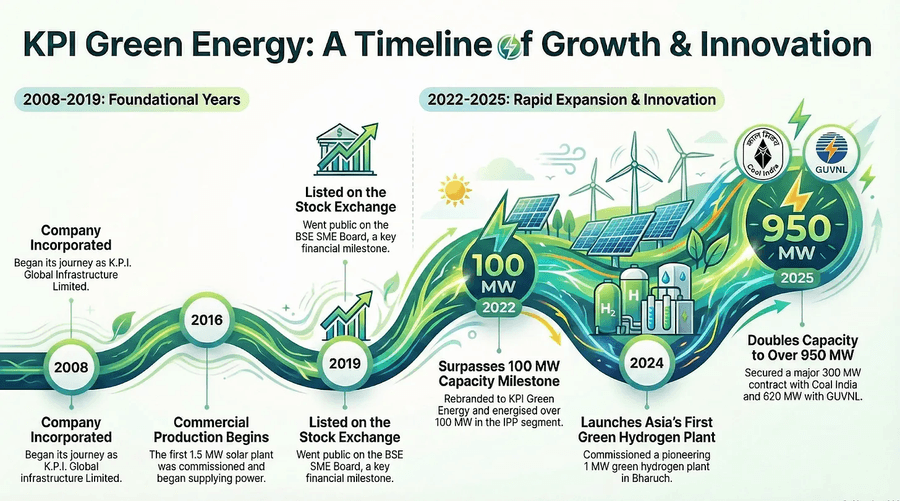
KPI started as a land and infrastructure transactions agent, but with the rise of solar, which required land, it changed its business focus towards generating solar energy.
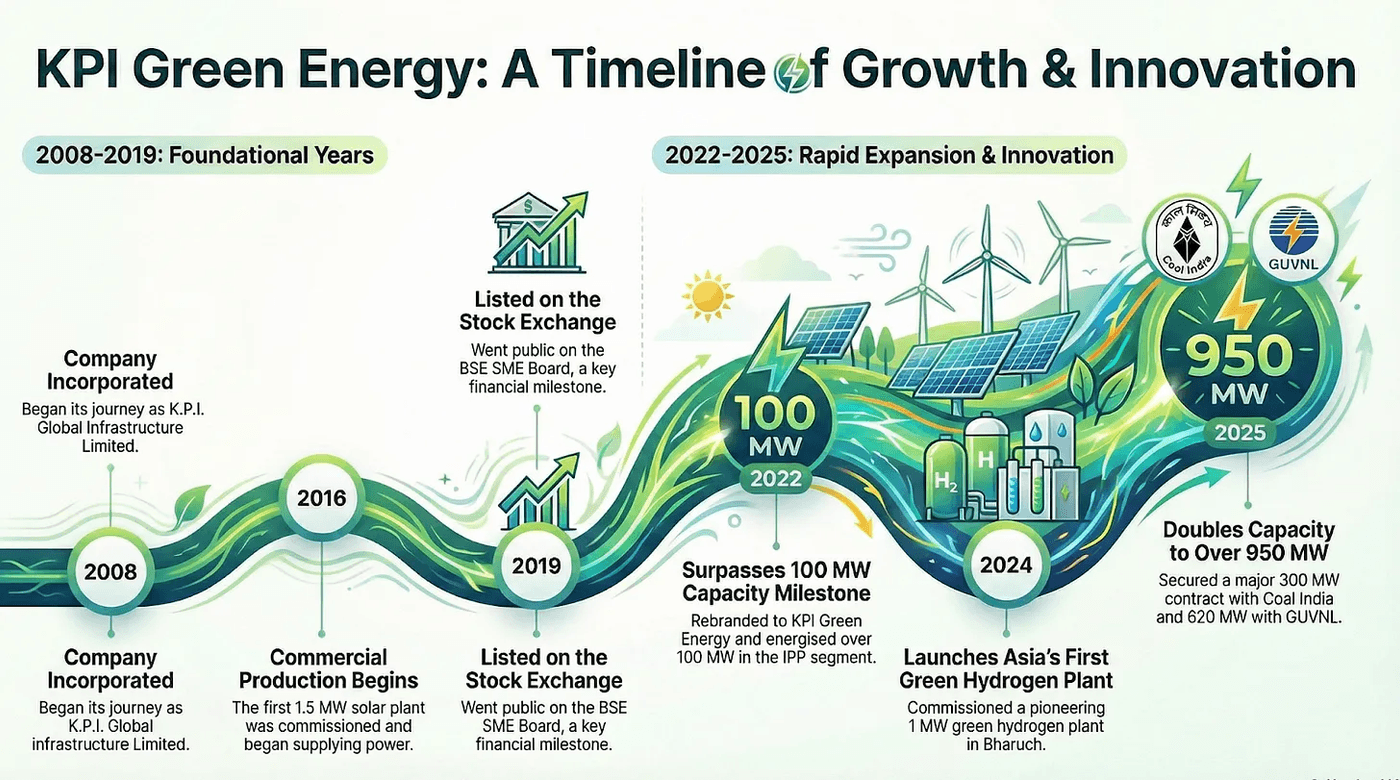
The company operates under the brand name Solarism and develops solar and hybrid power plants. The company operates in Gujarat but is now expanding to Maharashtra also. It mainly functions under two business verticals:
- Captive Power Producer, which generates nearly 91% of the revenue. It does this through access to shared power transmission infrastructure and connects a pool of grid-connected land for solar generation. It also provides operation and maintenance services. This enables it to generate electricity at a lower cost than the state discoms.
- As an independent power producer, it sells electricity based on a per-unit cost to the industry that requires it. The company has nearly 504 MW of IPP capacity.
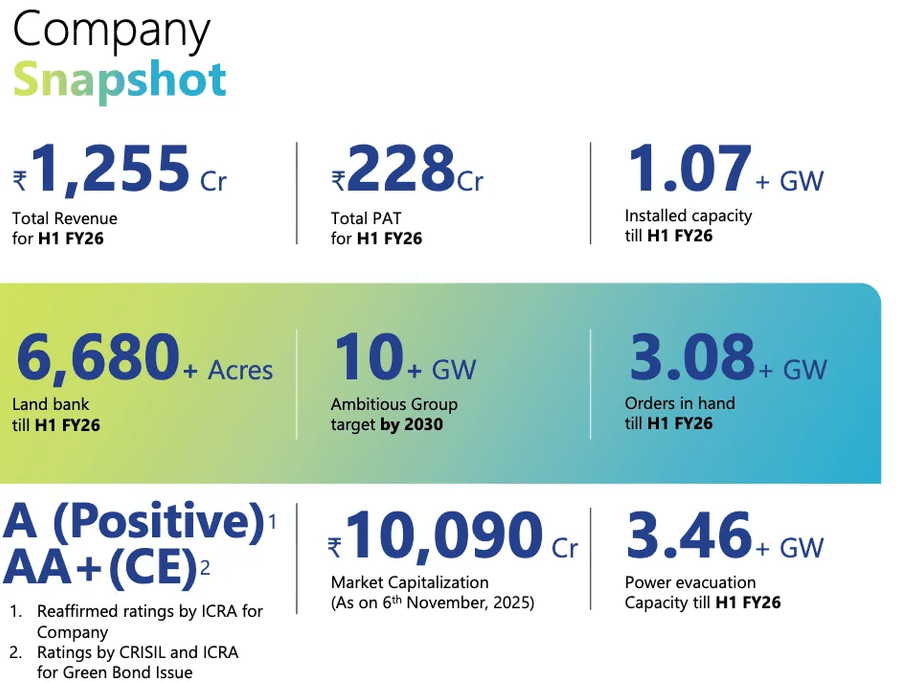
The company is seeing high growth in both CPP and IPP installations. With a total installed capacity of 1.07 GW, the company has orders for another 3.08 GW. This high growth in installation is likely to enhance revenues and profits for the company.
Energy Trading License: A new growth area that helps enhance efficiency.
The company has recently obtained a trade license from the Gujarat Electricity Regulatory Commission (GERC). What it does is it offers a company to trade electricity based on the requirements of the customer. This license allows a company to enhance efficiency by selling any extra capacity that it might have. This also opens up a new revenue source.
Enhancing Installed Capacity
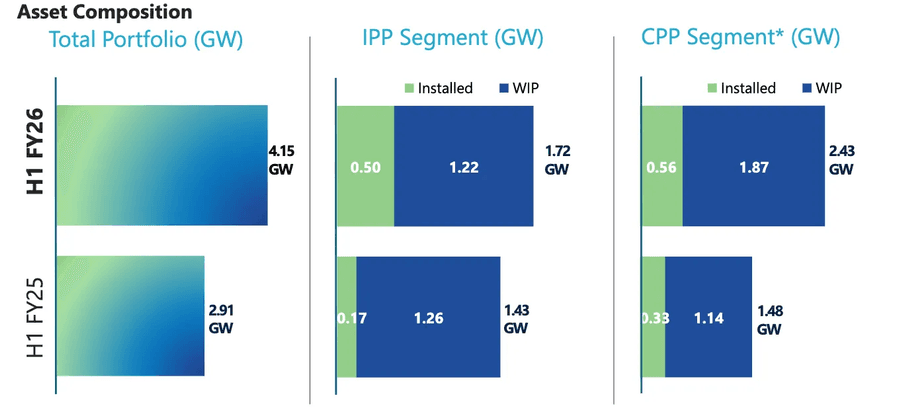
The company has nearly 4.15 GW of assets, out of which nearly 1.07 GW have been installed, while the rest is still under installation. The installed capacity is nearly similar for the IPP and the CPP segments.
Operational Bottleneck in IPP: The IPP revenue is a bit delayed. We have seen an increase in IPP from 170 MW to 535 MW, but this 3x increase in capacity has not translated into revenue. IPP still accounts for only 9% of the total group revenue. What happened was that the 240 MW Khevda project was completed, but the government (which had to buy the electricity) did not set up the transmission lines and the transformers, so the revenue has not yet come in. This revenue is expected to come in by December 2025.
Land Bank and Evacuation Infrastructure
Solar power producers lease or buy land in order to install panels. These are known as land banks. The land bank owned or leased by the company is 6,680 acres. The electricity transmission capacity, known as the evacuation capacity, is nearly 3.5 GW. High evacuation capacity helps the company transmit the produced electricity to the grid or to the customers, as required. This is the growth engine for the company because the land bank would be utilized to install more capacity, and the availability of evacuation capacity transmits energy where it is needed. It also helps prevent bottlenecks in case there is overcapacity, which further helps in trading energy.
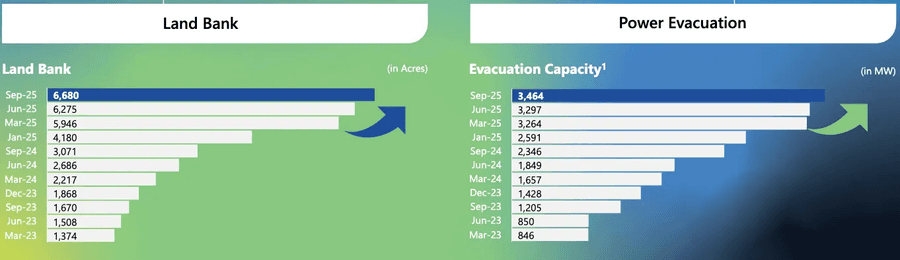
It is easy to make out that the company has a good order book, and installations are proceeding on track with some small shortcomings. The next step in the analysis is to see how much of this enhanced capacity is translating into sales and profits. However, before diving into the financials, one important aspect to consider is debt financing for the company.
Insights from the fund raise.
The company recently raised Rs. 670 crores in the form of green bonds, which carry a coupon of 8.5%. The bond has been rated AA+(CE) by CRISIL & ICRA.
The company has also raised Rs 3,200 crores as a term loan from the State Bank of India project finance unit, which will be used to develop a 250 MW solar and 370 MW hybrid project for the GUVNL PPA.
These large-scale funding combined with a good bond rating show the trust lenders have placed in the company.
Financials-Powering Growth Amid Margin Pressure
The company seems to be doing pretty well on the financial aspect. Based on the half-yearly results, the revenue is 1,255 crores. This is a 77% increase over the similar period of the previous year.
The increase in EBITDA is around 68%, which is a bit dampened when compared to the increase in revenue. Operating profit margin has decreased from 45% in 2019 to 32% now. This mainly results from the increase in manufacturing and material costs.
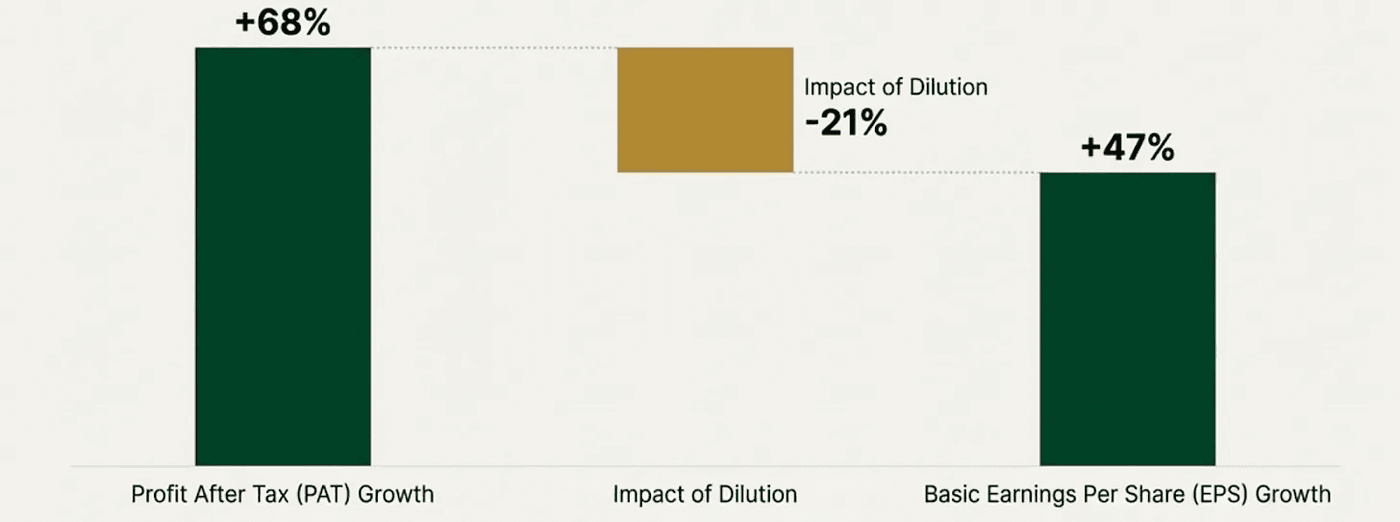
PAT has also risen by 68%. This is a good indication, but we see margin contraction here.
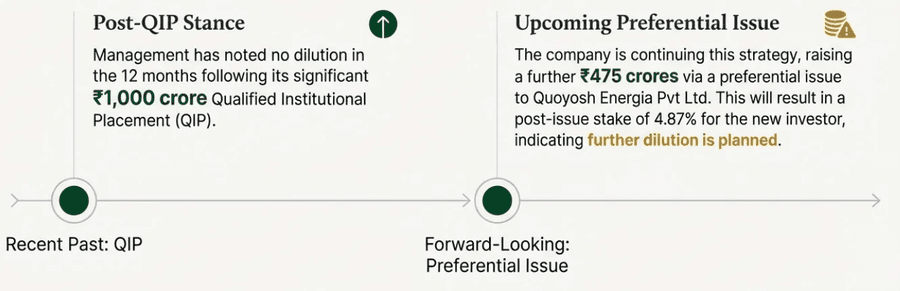
The basic EPS has also risen substantially, but only by 47%. We see a regular margin contraction at each level. However, the decrease in margin percentage for EPS is substantial. This can be attributed to dilution of equity due to the issue of new shares and warrants. The management states that they have not diluted the shares in the preceding 12 months after the QIP of 1,000 crores. However, the company is raising 475 crores via a preferential issue to Quoyosh Energia Pvt Ltd., with a post-issue stake for Quoyosh of 4.87%.
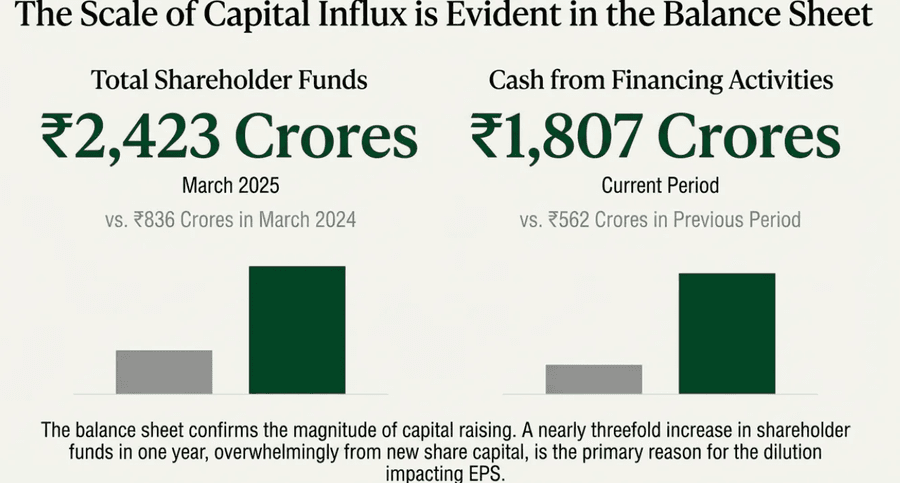
As per the balance sheet, the total shareholder funds have increased from 836 crores in March 2024 to 2,423 crores in March 2025. With a net profit of ₹397 crores for March 2025, the significant and nearly three times increase in shareholder funds can be attributed mostly to the issue of new share capital. Cash from financing activities has also increased from Rs 562 crores to Rs 1,807 crores.
The cash conversion cycle has improved slightly from 143 days to 122 days since 2019.
The return on capital employed stands at 18%, which has decreased from 25% two years ago. In spite of an extraordinary increase in profits, the return on capital employed has decreased, which results from the issue of new equity capital and new funds raised through debt and bonds.
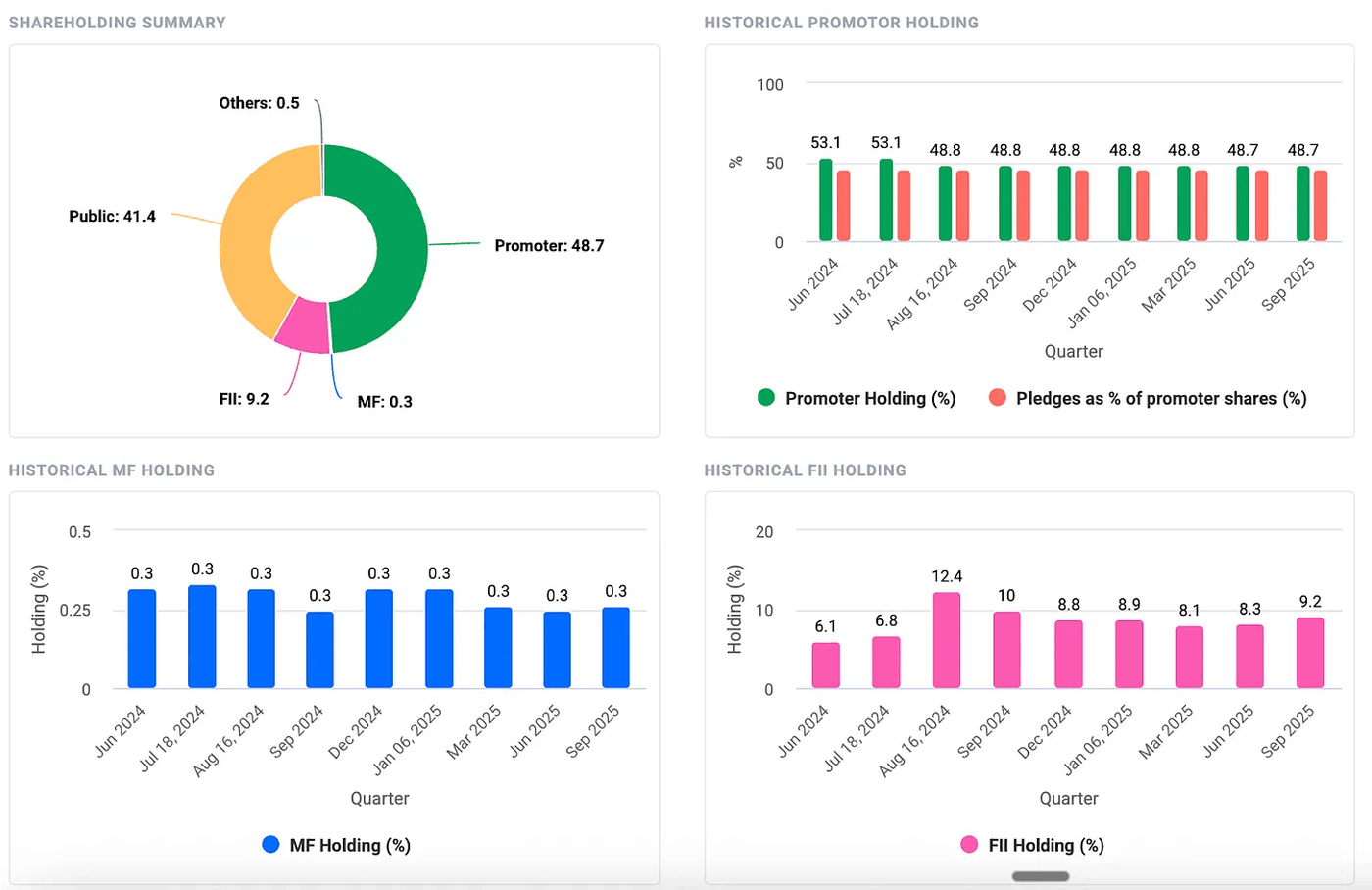
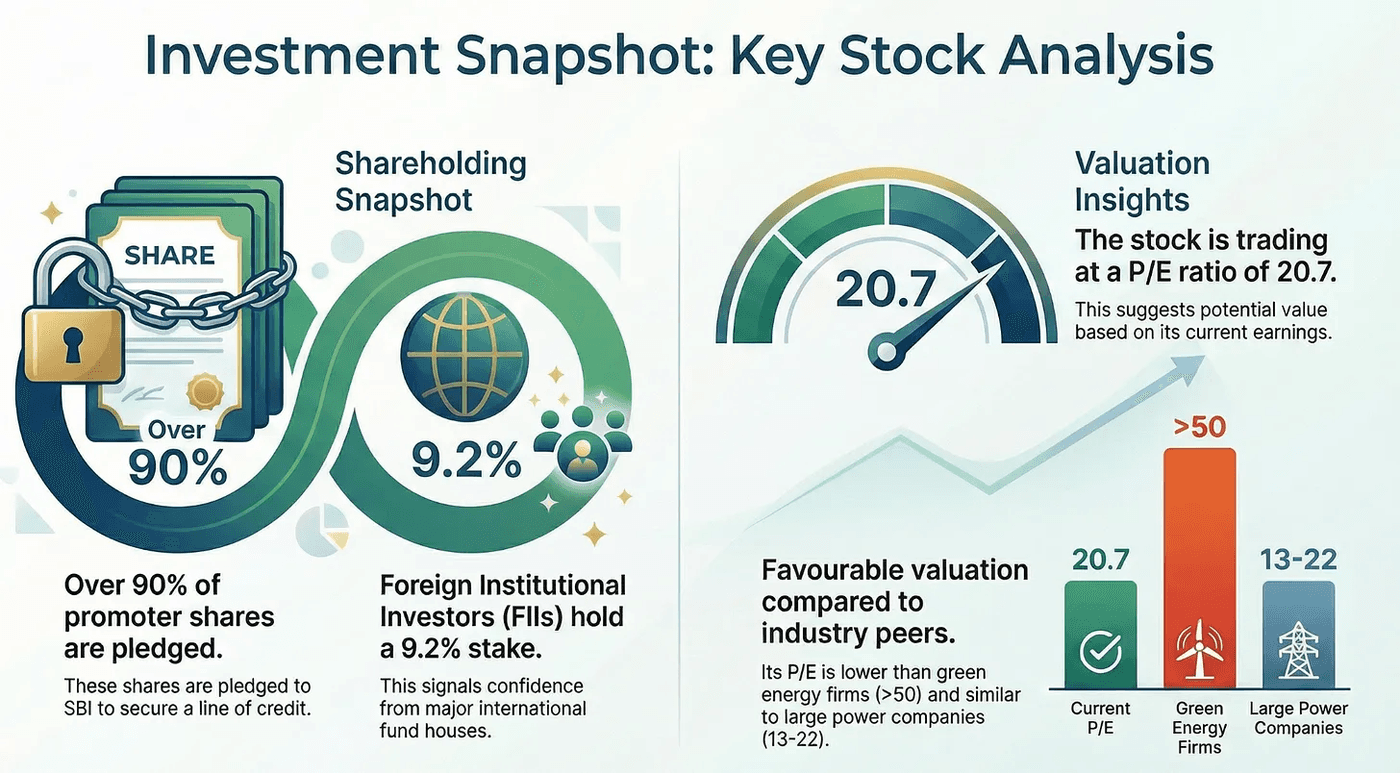
Promoters have more or less retained their holdings recently, but nearly all or more than 90% of the promoter shares are pledged. The shares are pledged out to SBI for the line of credit.
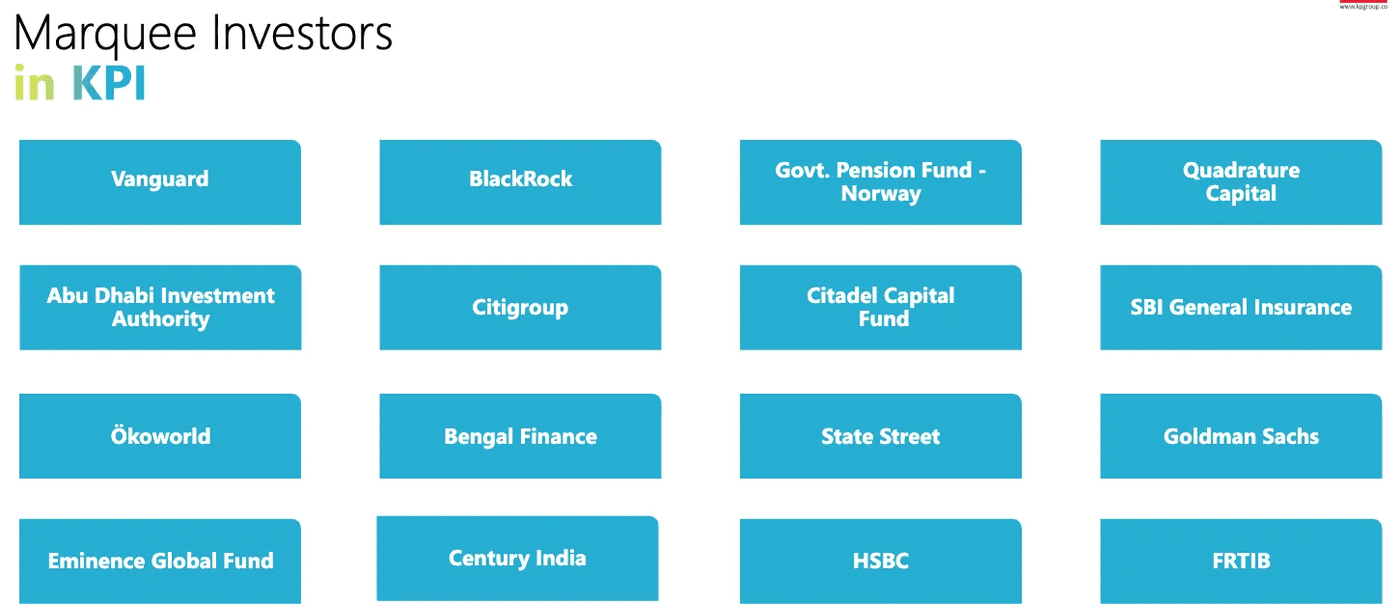
FIIs have nearly 9.2% stake in the company, which is an indicator of confidence in the company. A large number of big fund houses from the US and the Western World have invested in the company.
Valuation Measures
The stock is trading at a low P/E ratio of 20.7 when compared to green energy producers, which typically have a P/E more than 50. Large power companies such as NTPC, Adani, or Power Grid have a low P/E, which ranges from 13 to 22. When looking at valuations, the stock does have potential based on P/E.
Financial Shenanigans
So now the whole KPI group has five group companies, among which KPI Green Energy is the largest. KPI Green has expertise in solar, whereas KPI Energy, which is the other group company, has expertise in wind. This intercompany transaction creates an issue of double-counting of revenue.
The company does not provide a breakdown of how each project for the group is distributed among the group companies. This results in less clarity and decreases the quality of earnings reported.
Declining Government Interest
The evacuation infrastructure and grid stability have not been able to keep up with enhanced capacity for solar producers in India, and the governments across the country have been scrapping projects recently. There are nearly 42 projects that are lying without a PPA. This means that the producers who have installed the capacity have not been able to receive revenues for the same.
The management of the KPI is confident because they have already entered into a contract with the discoms in Gujarat and Maharashtra, and they are confident that their projects will receive revenues as per the contract. However, the company faces the risk that its capacity would not be evacuated in time due to n number of reasons. We have seen this recently with the IPP project, where the government has not been able to complete evacuation infrastructure on time.
Summing Up
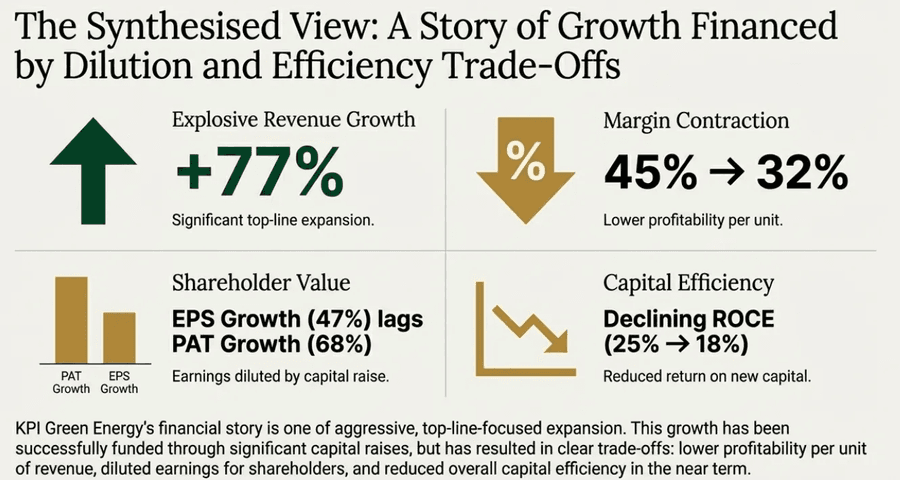
KPI Green Energy has shown exceptional financial results, with a revenue increase of 77% which is extraordinary to say the least. The confidence shown by lenders is also a significant positive point. However, the stock price has not seen good returns in the recent past. This can be attributed to the following factors:
- The company has been diluting equity or issuing new shares, so this reduces the earnings per share, which results in a reduction in stock prices.
- The second factor is the quality of earnings due to inter-company transactions and a lack of clarity on what part of the project goes to each group company. Including KPI Green Energy, there are chances that revenue could be double counted.
- Across India, solar projects are being curtailed to an extent by the respective state governments and DISCOMS. KPI has not seen burnt of that, but the risk for its projects still remains.
The financials of the KPI have been good, but there remains a world of caution. That’s the reason the stock price has not reached its full potential yet. We will be keeping close track of the developments as they come by, and inform our readers based on that.